

 https://doi.org/10.32067/GIE.2026.546
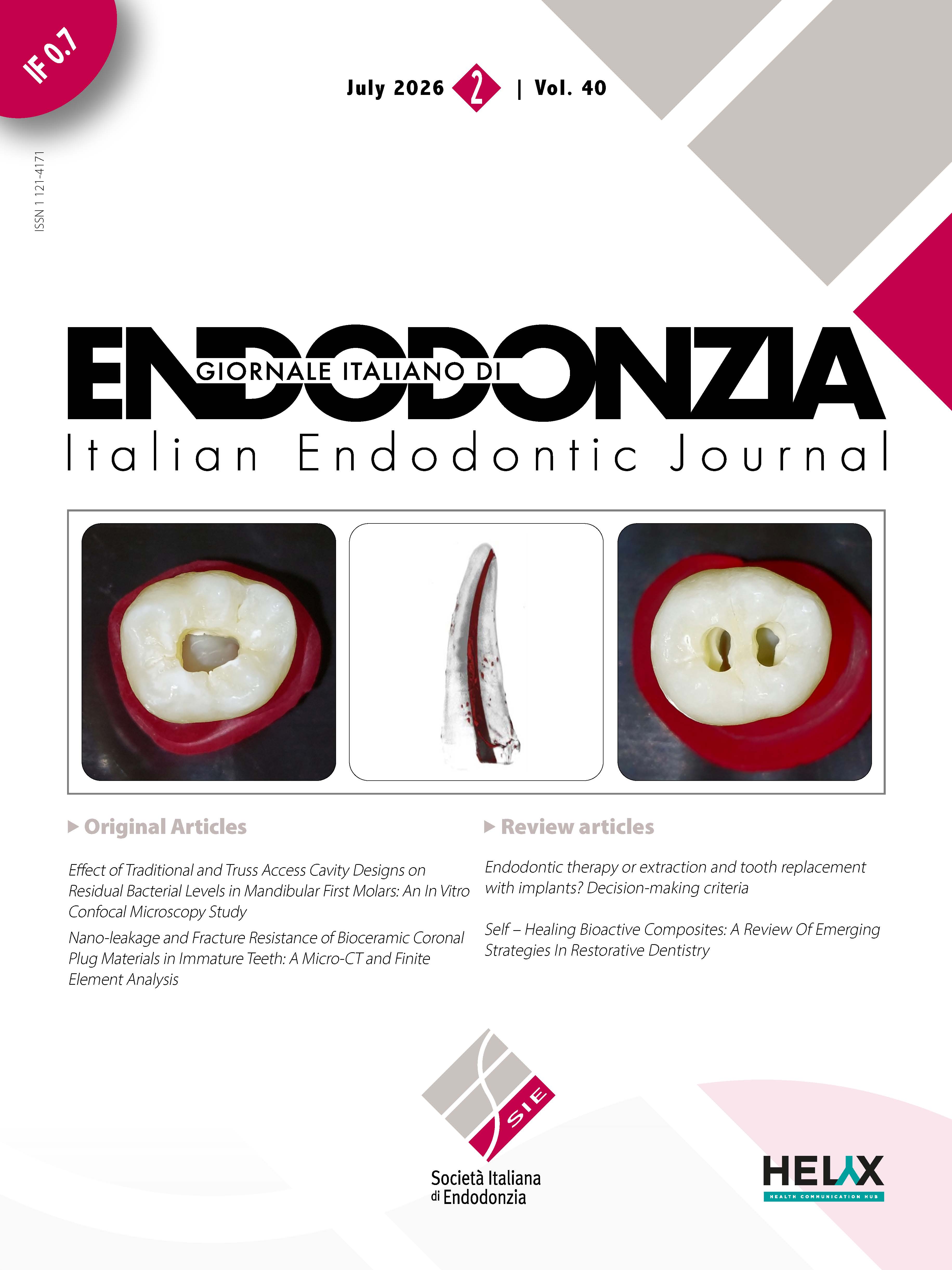
Effect of Traditional and Truss Access Cavity Designs on Residual Bacterial Levels in Mandibular First Molars: An In Vitro Confocal Microscopy Study
All claims expressed in this article are solely those of the authors and do not necessarily represent those of their affiliated organizations, or those of the publisher, the editors and the reviewers. Any product that may be evaluated in this article or claim that may be made by its manufacturer is not guaranteed or endorsed by the publisher.
Accepted: 20 March 2026
Published: 28 July 2026
Aim To quantitatively compare residual bacterial levels in the pulp chambers of mandibular first molars prepared using traditional endodontic access cavities (TEC) and truss access cavities (TAC) following standardized cleaning and shaping procedures.
Methodology This in vitro experimental study included thirty extracted human mandibular first molars, randomly assigned to two groups (n = 15 each): TEC and TAC. After access cavity preparation, all specimens were inoculated with Actinomyces naeslundii and incubated for 10 days to allow biofilm formation. The distal canals were instrumented using Vortex Blue rotary files with continuous irrigation using 5.25% sodium hypochlorite at a flow rate of 1 mL/min. A final irrigation protocol consisting of 5 mL of 5.25% sodium hypochlorite, 17% ethylenediaminetetraacetic acid, and 5 mL of sterile saline was applied. Specimens were sectioned and analyzed using confocal laser scanning microscopy to quantify residual bacterial presence. Percentage bacterial reduction was calculated, and intergroup comparisons were performed using an independent two-sample t test (α = 0.05).
Results The mean (± SD) percentage of bacterial reduction was 32.7% ± 8.0 in the TEC group and 28.4% ± 4.8 in the TAC group. No statistically significant difference was observed between the groups (P = 0.08).
Conclusion Under the conditions of this in vitro study, truss access cavities demonstrated bacterial reduction comparable to traditional endodontic access cavities following cleaning and shaping. These findings suggest that truss access designs may be considered a minimally invasive alternative without compromising intracanal disinfection.
Downloads
Supporting Agencies
How to Cite

This work is licensed under a Creative Commons Attribution-NonCommercial 4.0 International License.
Giornale Italiano di Endodonzia has chosen to apply the Creative Commons Attribution NonCommercial 4.0 International License (CC BY-NC 4.0) to all manuscripts to be published.